How to lower your golf cart fleet insurance premiums (hint: it’s your data)
If you’ve wondered for years why your golf cart fleet insurance has been so expensive, it’s likely because your underwriter had no idea what your fleet actually did.
Thankfully, this is changing, and faster than most fleet operators and dealers realize. The biggest lever on your premium right now isn’t your claims record or your fleet size, but evidence. That’s where data and fleet connectivity come into play.
If you’ve followed our blog (and the golf cart industry at large) you’ll know that solving golf cart fleet insurance for operators and dealers is a huge topic. It’s something we talk about often, including in a candid webinar this week with vQuip and Christensen Group. The biggest takeaway for anyone looking to insure a fleet of vehicles is that connectivity is the number-one saver when it comes to lowering premiums, and we explain why below:
WATCH NOW: An Honest Look at Fleet Insurance
In our most recent webinar, Joyride’s Partnerships Director Matt Altman has a candid conversation with insurance experts at vQuip and Christensen Group about how connected carts are your ticket to lower premiums.
The global golf cart and LSV market is on pace to reach $11 billion, driven by increased demand in golf courses, resorts, retirement communities and commercial applications beyond golf.
If a renter damages one of your carts, or injures themselves driving it, is that actually covered?
For many operators, the answer is no.
Most golf cart rental fleets are insured through commercial general liability (GL) alone. GL is built to cover your negligence, your premises, your staff and your maintenance. It was never designed to respond to a member of the public renting a motor vehicle from you and crashing it. Routing everything through general liability leaves renter-caused incidents uninsured, and for a rental fleet that becomes the largest exposure on the books.
The alternative is a bifurcated structure: participant claims sit on their own layer, separated from your commercial GL. That does two things at once: covers the exposure that was previously exposed, and it stops a single renter incident from landing on your GL history and following you to renewal on every line of your business for years.
It also tends to price more competitively than forcing everything through one policy, which surprises people who assume more layers means more money.
For dealers running rentals alongside sales and service, the stakes on that separation are higher than they look. Your general liability isn’t only protecting the rental side, it’s the same policy standing behind your showroom, your service department and your staff. When a renter incident at a festival lands on that policy, it doesn’t just reprice your rentals. It follows the entire dealership to renewal, on every line. The rental business is usually the smallest part of the operation and the most likely source of the claim that damages all of it.
Until recently, golf carts were underwritten as golf carts…not rental vehicles
To understand how the market got here, you have to understand what carriers were actually pricing.
The class earned its reputation on the golf course. Rollover-prone on uneven terrain, driven by people not thinking of themselves as operating a motor vehicle. Carriers had decades of loss data from that environment, and when losses mounted, many backed away from the entire vehicle class rather than segment it.
Brandon Schuh, Head of Specialty Insurance at Christensen Group, describes it as a legacy classification problem: carriers avoided the class on the strength of that rollover reputation even as the real-world risk profile shifted toward predictable roadway use. The consequence was that low-speed vehicle association members were approaching insurers and finding no viable coverage at all.
Meanwhile, the vehicles themselves changed underneath the underwriting. Modern low-speed vehicles and carts come off the line with seatbelts, mirrors, lighting and turn signals built to federal standards, and registration rules in a growing number of states now let them share roadways with cars. Taking a cart off the fairway and onto a paved, mapped, speed-limited road made it meaningfully safer. But underwriting appetite is built on historical data, and the historical data was still all focused on the golf course.
Two other shifts occured at the same time. Rentals normalized, thanks to a decade of scooters and e-bikes that trained a generation to unlock a vehicle from an app without a second thought. And demographics moved, with retirees relocating into LSV-friendly communities where carts are a primary local transportation.
While fleets grew and vehicles got safer, the use case left the course entirely. Yet the insurance market kept pricing a golf cart from 2005.
Who, What, Where: The three questions every fleet insurance underwriter wants to know
The experts all agree that underwriting a rental fleet comes down to three questions. Until recently, an operator had no way to answer any of them with anything better than a promise.
1. Who was driving? Not who rented the cart, but who was physically behind the wheel, and did anyone verify they were licensed and old enough? A signed waiver and a photocopied licence is just an assertion, but not a record.
This question gets considerably harder when you rent to organizations rather than individuals. Deliver 30 carts to a festival and your contract is with the event, but the people actually driving are production staff, vendors, security and volunteers. Essentially, a rotating group nobody screened, operating vehicles across three days on a site you don’t control. Same with a resort that takes a seasonal block: your agreement is with the property, and the drivers are guests. From an underwriter’s perspective, that’s a large number of unverified operators and no record of any of them. Therefore, it is the most difficult version of this risk to price, which is why it has historically been quoted defensively or declined outright.
It’s also where verification at unlock changes the file the most. A contract rental where every driver is checked and every trip is logged looks nothing like a contract rental where 30 keys were handed to an event coordinator on Friday morning.
2. Where could the vehicle go? A rental agreement saying “stay within the resort” is a request. An underwriter has no way to know whether it was honored, so they assume sometimes it wasn’t.
3. What happened? Claim files are typically built from a renter’s account, an employee’s recollection and a damage estimate. Reconstructing an incident weeks later from memory favours whoever tells the better story.
Connected fleet technology answers all three automatically, on every rental.
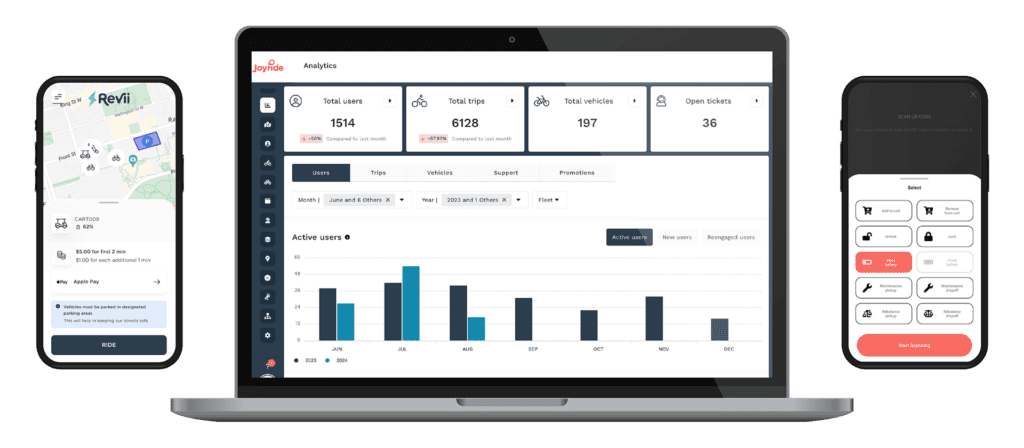
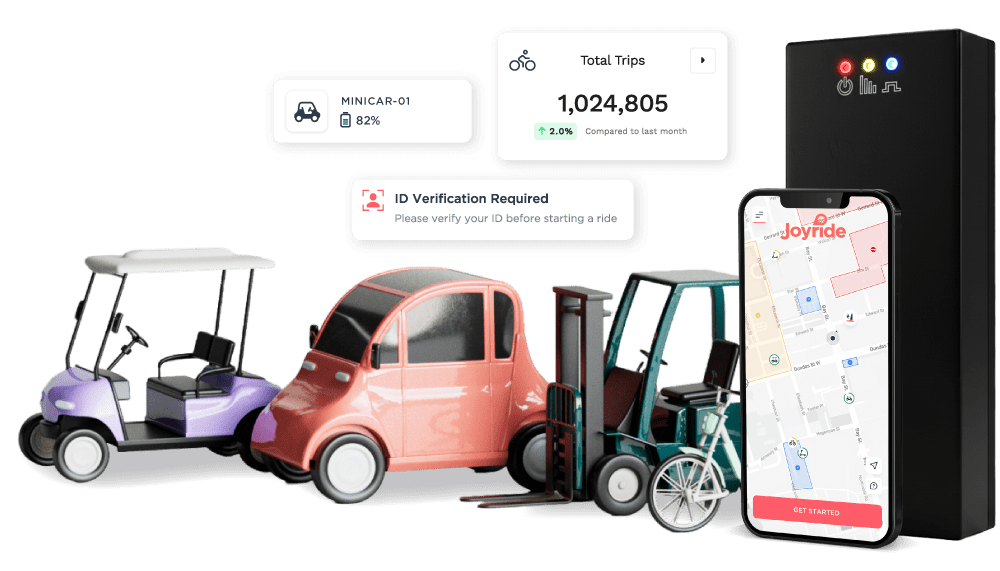
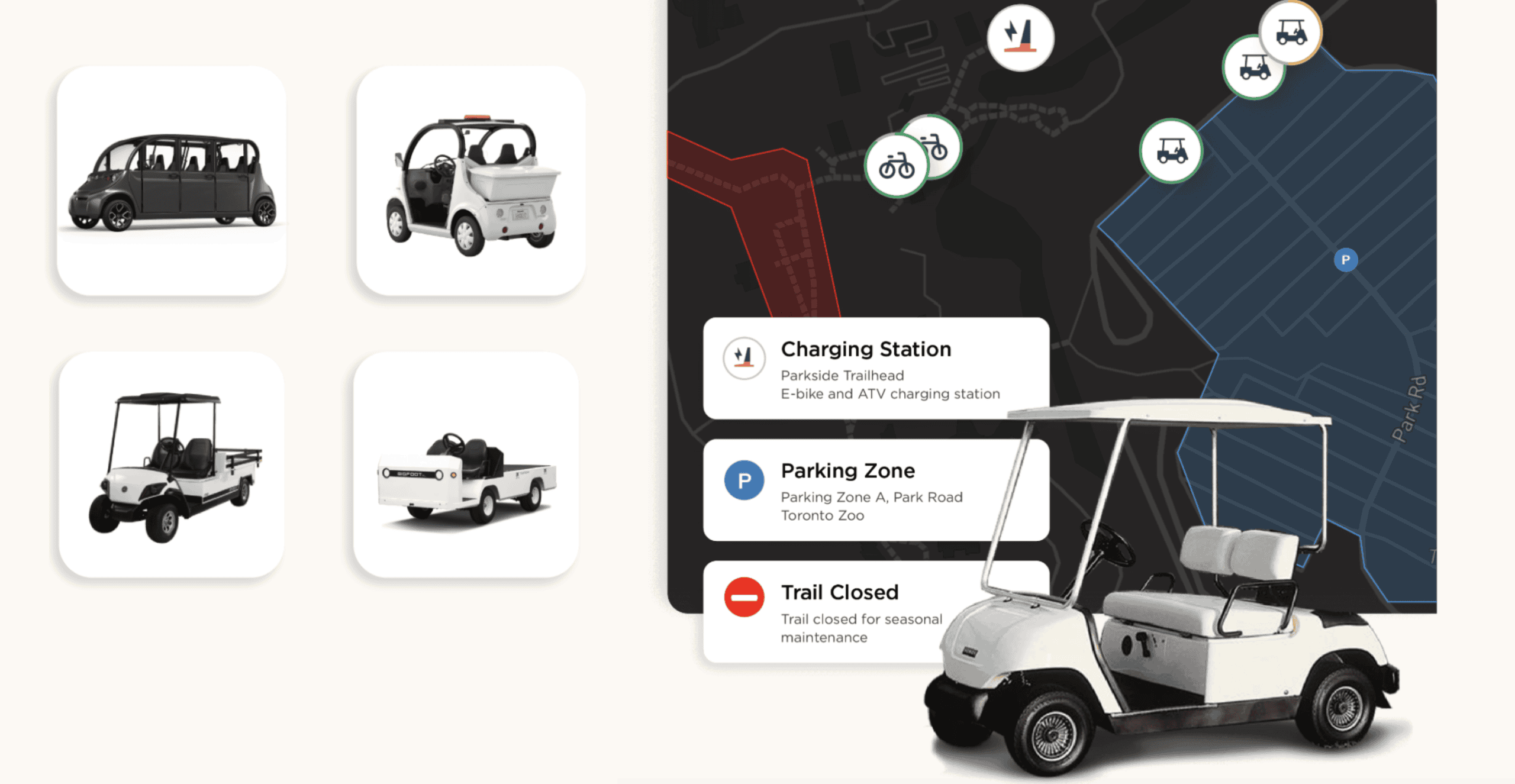
ID and driver verification at unlock. Geofencing that keeps vehicles in bounds by enforcement rather than request, with speed governed by zone. Full trip history, including route, speed, duration and hard braking, impact events. Retrofitting carts with an IoT connectivity device means it is all cloud-based, app-enabled and written continuously in real-time and ready the moment a claim is filed.
An operator who can’t answer basic questions about fleet size, usage patterns and renter verification is difficult to quote at any price. A connected fleet already has every answer, which makes scaling possible without insurance cost becoming the ceiling.
Why lower premiums are possible now vs. three years ago
The underwriting model came from adjacent recreational vehicle risk. If you think about it, watersports and powersports operators have been insured on exactly this structure for years, with participant exposure handled separately from the operator’s general liability. The framework was proven, but it hadn’t been pointed at low-speed vehicles.
The technology derived from shared mobility. Driver verification, geofencing and trip telematics have been standard in bikeshare, scooter fleets and car rental for the better part of a decade. What changed is that it reached LSVs at a price point that makes sense for a 20-cart operation rather than a 2,000-vehicle one.
Once a proven insurance structure is placed next to fleet data that finally exists, the problem stops being structural.
Two things that matter if your carts leave your lot
Coverage that follows utilization, not the calendar. Rental fleets serving events and resorts are seasonal and unpredictable: flat out for a festival weekend, parked for six weeks after. An annual premium priced on peak exposure charges you for months of vehicles sitting still. Coverage applied trip-by-trip through the platform tracks what the fleet did, which matters more the more your utilization swings.
Cover for vehicles sitting idle somewhere else. A fleet staged overnight at an event site or stored in a resort’s back lot is exposed to damage and theft while generating no revenue and sitting outside your control. That’s an inland marine question, not a liability one, and it’s a common gap in policies built around active operations. If your carts regularly overnight off-premises, confirm it’s addressed.
Six things to have ready before you request a quote
Missing answers are often deal-breakers before a quote is even written. Here’s what to know and ask before requesting an insurance quote:
- Fleet size and vehicle mix. How many units, what type, where they’re stored.
- Where and how carts are rented. Hourly, daily, resort, neighborhood, event. Remember, the use case drives the classification.
- How you verify every renter. Licence check, age verification, ID capture at the start of the rental.
- Trip and usage data. Specifically what you can produce on request, not what you theoretically collect.
- Speed limits and geofencing. Which controls are switched on, and what enforcement looks like.
- Claims history, told straight. Every incident, and what you changed after each one.
The most important questions to ask your broker
Three questions worth asking directly:
- Is renter-caused damage actually covered, or only damage caused by my staff?
- Where exactly does my general liability stop?
- What happens to my limits after one claim?
And these are three red flags:
- Everything routed through general liability, with no separate participant layer
- No renter coverage of any kind
- A policy written for a golf course, not a rental fleet
Be sure to check the classification language on your declarations page. If it describes a golf facility, you are insured as a golf facility.
If you rent to venues and events, ask what your coverage looks like when the vehicle is on property you don’t own and don’t control, as some policies narrow considerably the moment the fleet leaves your address. Second, ask how quickly your broker can issue a certificate of insurance naming a venue as additional insured, because resorts, municipalities and event producers will require one and will not release the booking without it. A broker who takes a week to produce a COI will eventually cost you a contract.
Frequently asked questions
Can I add IoT and GPS tracking to golf carts I already own?
Yes. The Joyride platform is vehicle-agnostic, meaning you can install our Neon IoT device retrofitted on an existing fleet. This makes your cart instantly connected to the cloud and tracked 24/7 with GPS. Most operators do not replace current vehicles to get connected. The hardware installs into the cart’s existing electrical system. Joyride customers range from the world’s biggest property management companies, data centers, resorts, golf courses and communities, all using retrofitted carts with Neon IoT devices installed.
Do I need a mechanic to install the IoT device?
Installation is designed for your own staff, typically in less than 20 minutes per vehicle, with no cutting or fabrication. Most operators complete a full fleet in a day or two.
What kind of GPS tracking is included?
Joyride’s connected vehicle platform used AI tools, automation and app-controlled features to run your fleet for you. This means every vehicle records its real-time location (leading to theft prevention), trip history, geofence boundary enforcement, speed governing by zone, and is accessed by keyless remote lock/unlock. The location data is what underwriters care about, and the remote controls are what prevent incidents in the first place.
I rent to resorts and events, not directly to consumers. Does that change my coverage needs?
In fact, it raises them. Renting to an organization means the drivers are that organization’s guests, staff or vendors, in other words, people you never screened, often in volume, on a site you don’t control. Some policies also narrow once vehicles leave your premises. Contract and event rentals need explicit confirmation of off-premises coverage and a clear answer on who is covered when the driver isn’t the person who signed.
Do I need separate coverage for my rental fleet if my dealership is already insured?
Almost certainly. Garage and dealer policies are written around owned inventory, employee use and customer test drives. Renting vehicles to the public or to venues is a different risk class, and running it through dealership coverage tends to leave the renter exposure uninsured while putting the rest of the dealership’s history at risk. This is worth confirming in writing rather than assuming.
How is Joyride working with vQuip and Christensen Group to lower premiums?
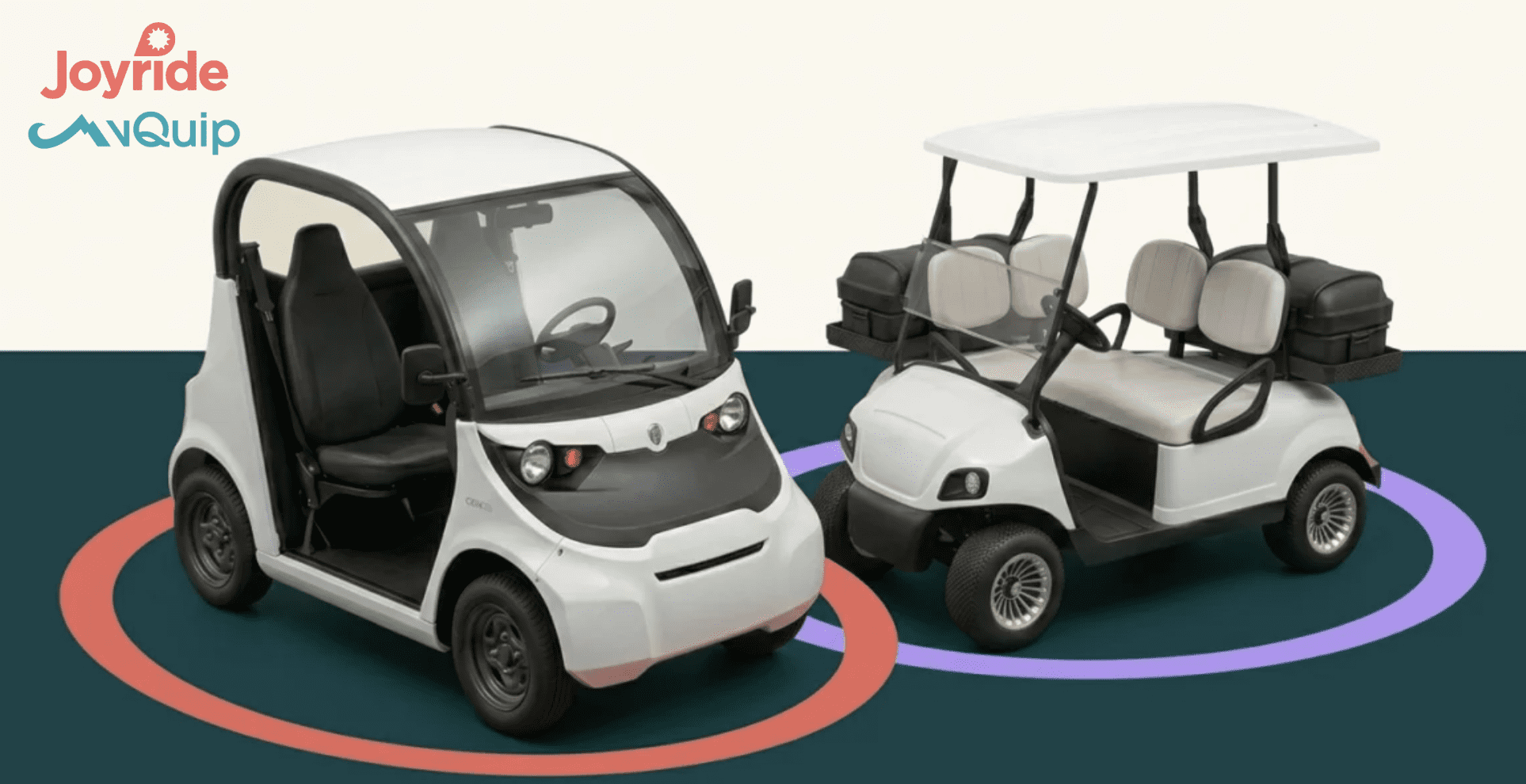
We have a flushed out program with vQuip and Christensen group that can lead to a 50% reduction in premiums for Joyride customers. Availability varies by state and by use case, and the program has defined underwriting criteria for what makes a fleet insurable. The fastest way to get a straight answer is to visit this page and ask for a quote.
What about damage or theft when carts aren’t being rented?
Inland marine coverage handles equipment damage and theft while vehicles are sitting idle. It is worth confirming it’s included, since it’s a common gap in policies built only around operations.
Will connected fleet data definitely lower my premium?
Providing connected fleet data moves you out of the category-average bucket and into a file underwritten on evidence. For a well-run fleet, that almost always results in the cheaper outcome.
Ready to see what your data is worth? Adventure Shield, vQuip’s insurance program purpose-built for golf cart and low-speed vehicle rental and tour operations, is available exclusively through the Joyride platform. Book a walkthrough of connected fleet setup and what it does to your quote.